Monohydrate vs HCl
Creatine monohydrate vs HCl
HCl is creatine bound to hydrochloric acid, sold as a smaller, gentler, more expensive scoop. The molecule you wanted is still creatine. Five grams of monohydrate remains the protocol.
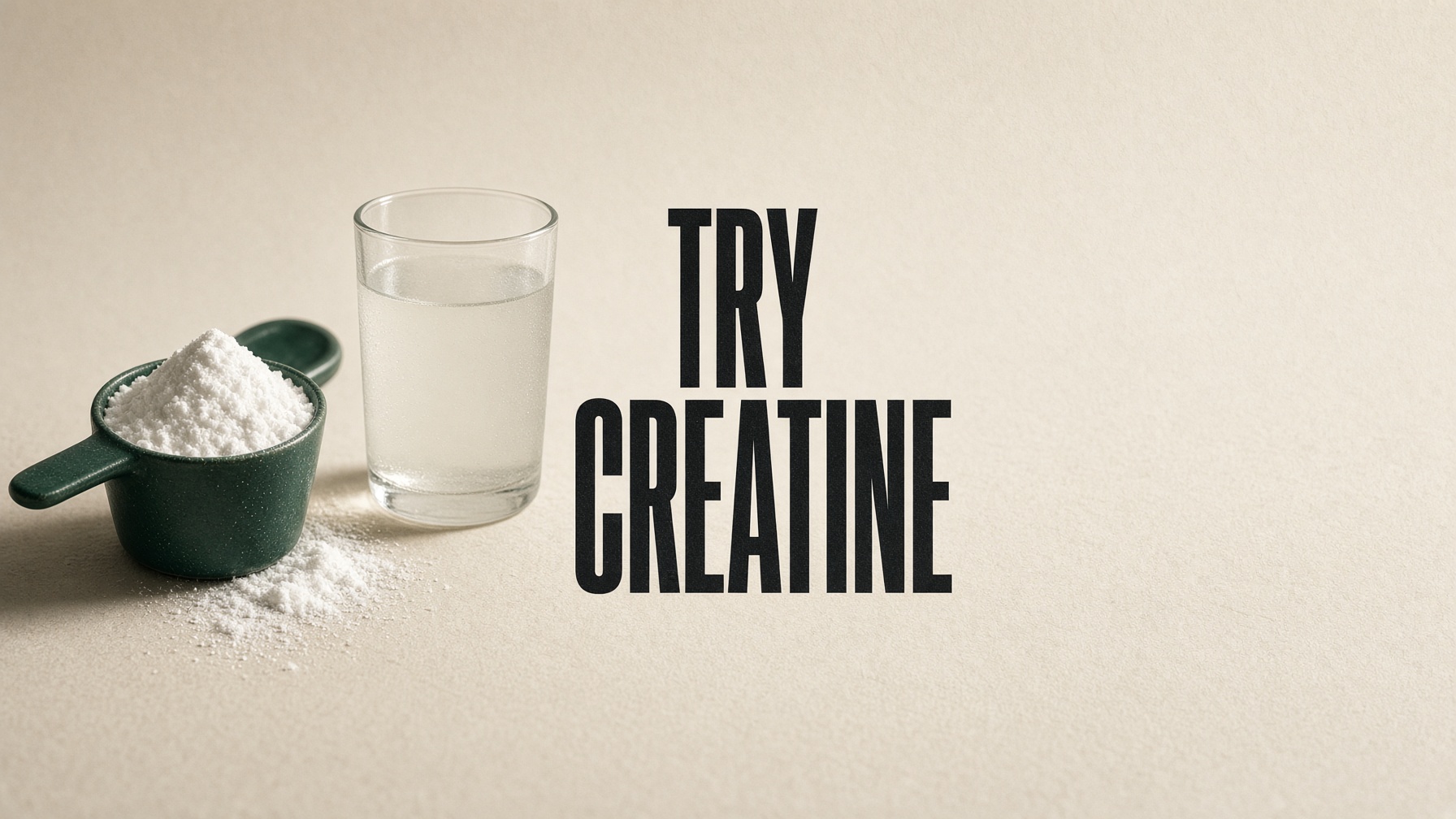
What HCl actually is
Creatine hydrochloride is a salt. Marketing says it dissolves better, bloating less, and needs a fraction of the dose. Solubility in a glass is real. A better training result is not. Almost every trial that put creatine on the map used monohydrate at about 3–5 g a day, sometimes with a loading week. HCl does not have that library behind it.
If a tub is easier to mix, that is a texture argument. It is not a reason to pay twice per gram or to take 750 mg and call it a protocol. Use the dose calculator if you want the kilogram math. Then buy monohydrate.
| Monohydrate | HCl / others | |
|---|---|---|
| Typical serving | 5 g | 0.75–2 g |
| Creatine delivered | The dose on the scoop | Less than the scoop weight |
| Trial library | Decades | Thin |
| Mixability | Gritty in cold water | Often better |
| Cost per 5 g creatine | ~$0.30–$0.45 | Usually higher |
| Buffered / ethyl ester | Skip | Skip |
The smaller-dose trick
A 5 g scoop of monohydrate is almost entirely creatine plus a water molecule. An HCl serving listed at 1.5 g is not “more concentrated magic.” It is a smaller pile of a different salt. To match 5 g of creatine you would still need more HCl than the bottle wants you to take. The aisle wins if you do not do that math.
Bloating stories are usually load-week stories: 20 g a day, split badly, on an empty stomach. Split the scoops or skip loading. Loading is optional. Switching salts to fix a loading hangover is the expensive path.
Buffered, ester, nitrate
Kre-Alkalyn and other “buffered” creatines claim they will not convert to creatinine in the stomach. Published comparisons do not show a performance edge over monohydrate. Ethyl ester has been shown to raise muscle creatine less. Nitrate and other conjugates are still the same homework: where is the trial at an equal creatine dose? Until that exists, you are buying a story.
What to buy instead
Micronized creatine monohydrate, 5 g, unflavored, third-party tested. Creapure if you want the German spec. NSF if you get drug-tested. Thorne, Sports Research, Momentous are the three we send to Amazon. Not HCl. Not a gummy. Gummies have their own math problem.
Questions
- Is creatine HCl better than monohydrate?
- Not in the outcome trials that matter. HCl is more soluble in a glass. Muscle creatine and gym performance still track dose of creatine, not the salt. Monohydrate has decades of data. HCl does not.
- Can I take a smaller dose of HCl?
- Labels often say 750 mg–2 g. That is less creatine than a 5 g monohydrate scoop. Solubility is not a license to underdose. If you insist on HCl, still aim for a creatine-equivalent near 3–5 g.
- Does buffered creatine (Kre-Alkalyn) work better?
- No meaningful advantage in published head-to-heads. You pay for a pH story. Buy monohydrate.
- What about creatine ethyl ester?
- Worse than monohydrate in the studies that compared them. Skip it.
The 5 g tub on Amazon
Sports Research Creapure · $37 · 90 servings
As an Amazon Associate I earn from qualifying purchases.
Keep reading
Buy on Amazon
Three tubs we would actually buy
We do not sell our own powder yet. These are the three 5 g monohydrate tubs we trust. We earn a commission as an Amazon Associate.
 Most tested
Thorne Creatine
NSF Certified for Sport. The one to buy if you get drug-tested or want the most trusted powder on Amazon.
 Best value
Sports Research Creapure
German Creapure, Informed Sport — usually the cheapest honest 5 g scoop you can get tomorrow.
Creapure + NSFMomentous Creatine
Creapure, NSF Certified for Sport. Premium powder if you already buy Momentous. Fine. Not magic.
As an Amazon Associate I earn from qualifying purchases. Prices on Amazon change.
Get the protocol.
One email when the first batch ships, plus the 5 g protocol PDF. No daily ‘motivation.’